 I Climbed Kilimanjaro
 · independent advice for your climbAdvice from people who've come back down Mount Kilimanjaro.
Most Kilimanjaro advice online is written by companies selling Kilimanjaro climbs. This is written by people who have stood on the summit and walked back to the gate. We compare routes, real costs and operators with sourced figures — and we sell nothing: no climbs, no commissions, no sponsored spots.
Your climb, in eight steps
The full planning guide →What the numbers say
The guides
Plan the whole trip
Season, days, route, operator, budget, paperwork, training and packing — the eight decisions in the order that matters.
Open →RoutesWhich route, how many days
Every route compared by people who walked them: days, crowds, scenery, huts or tents, and what the success numbers really say.
Open →CostWhat a climb really costs
The fixed park fees inside every quote, why prices differ by thousands, and a checker that shows what your quote leaves for the crew.
Open →OperatorsChoosing an operator
Local or foreign, KPAP explained, the checks that are hard to fake, the questions to send and the red flags to walk away from.
Open →Safety & altitudeThe honest risk picture
Real fatality numbers, how altitude illness shows itself, the three warning signs, and what a good operator carries.
Open →TippingTipping your crew
How much, to whom and how — with a calculator, because the tip is a big part of what the people carrying your tent take home.
Open →CommunityThe summit register
Everyone who has added their summit, by the morning they got there — with the route, the guide who got them up and one line for the next climber.
Open →What we wish we'd known before we went up
Book the extra day.
It costs a few hundred dollars and does more for your chance of standing on the summit than any jacket, boot or gadget you can buy.
Why days matter →Choose the operator before the route.
The company decides how many days you get, how the crew is treated and what happens if you get ill high up. The route is the easy part.
How to vet one →Go slower than feels sensible.
Pole pole isn't a slogan, it's the technique. The people who struggle most on summit night usually went too fast in the first hours — and the first days.
Summit night →Tell your guide about the headache tonight, not tomorrow.
Mild altitude sickness is common and usually passes. Hiding it is how mild becomes dangerous. Your guide can only act on what they know.
The warning signs →Eat and drink when you don't want to.
Appetite disappears at altitude. Force the food down and keep drinking through the day; it shows on summit night.
Plan the climb →Summit night is colder than you can picture.
Warm mitts over liner gloves, an insulated sleeve so your water doesn't freeze, and phone and torch batteries in an inside pocket.
The packing list →The way down is where knees and ankles go.
You will be exhausted and moving fast on loose scree. Keep your poles out and your concentration on until you're at camp.
The descent →Learn your crew's names — and tip each of them.
They carried the tents, the food and your bag, at altitude, faster than you. Count them on day one and give each person their own envelope at the end.
Tipping, explained →Turning round is not failing.
Plenty of climbers don't reach Uhuru Peak, and on short itineraries most don't. Stella Point and Gilman's Point are extraordinary places to have stood, and a guide who turns you round is doing their job.
The summit points →Seen on the trail
Climbers' videos, route by route · embedded from YouTubeVideos belong to their creators and play from YouTube. For trip reports and more videos, open any route: Machame, Lemosho, Marangu, Rongai, Northern Circuit.
Built by climbers, for the next ones
We climbed Kilimanjaro, made our share of mistakes, stood on the summit and came back down. Most sites that rank routes or recommend operators are operators themselves, or earn a commission when you book. We do neither — which is why we can tell you when an itinerary is too short or a quote leaves too little for safety.
- We sell no climbs.
- No commissions, referral fees or affiliate links.
- No operator can pay to be listed, ranked or recommended.
- Figures are sourced and dated. Where sources disagree, we say so.
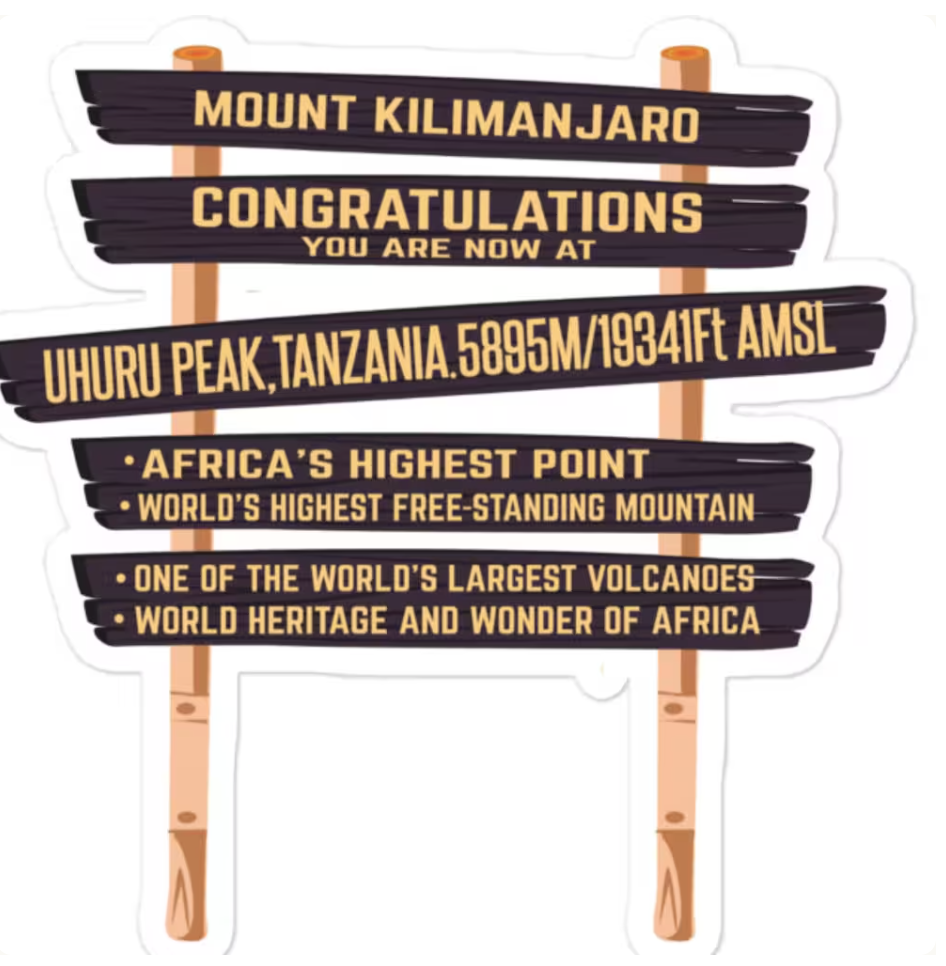
- The one thing for sale: summit sign keepsakes. Never climbs.
Pass it on.
Add your summit to the register with the route, the guide who got you there and one line for the next climber. It's free, needs no account, and comes with a keepsake certificate.
Add your summit and adviceCommon questions
Who writes I Climbed Kilimanjaro?
People who have climbed Kilimanjaro and come back down. The site sells no climbs, takes no commission or referral fees, and no operator can pay to be listed, ranked or recommended. The only thing sold anywhere near it is a summit sign keepsake.
How much does it cost to climb Kilimanjaro?
Most climbers pay roughly $1,800–$3,500 per person for a seven- or eight-day climb with an established Tanzanian operator. About $956 of a seven-day camping climb is fixed park fees and VAT, the same for every operator. Tips, flights, visa, insurance and gear are extra.
How many days should I book to climb Kilimanjaro?
Seven days or more, and eight if you can. Historical park figures show summit success rising from around a quarter of climbers on five-day itineraries to most climbers on eight-day ones, and the extra days also lower the risk of serious altitude illness.
When is the best time to climb Kilimanjaro?
The two dry windows, roughly January to mid-March and late June to October. January, February and September combine dry weather with fewer people than the July and August peak.
How do I choose a Kilimanjaro operator?
Check the Kilimanjaro Porters Assistance Project partner list, ask for a TALA licence number, and send every company on your shortlist the same questions about oxygen, pulse oximetry, first aid training and evacuation. Compare the specific answers rather than the brochures.